
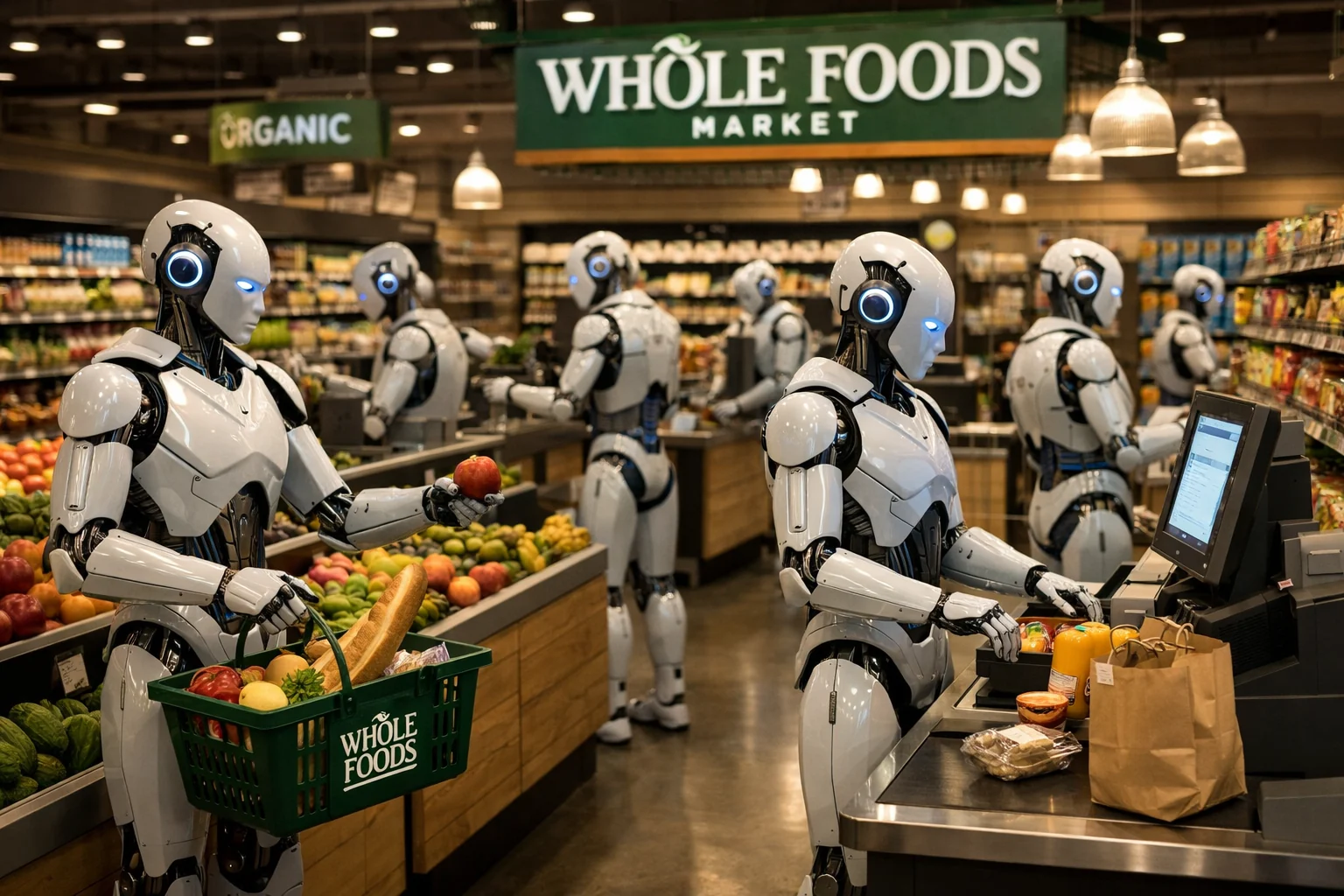
Artificial intelligence is actively reshaping the structure of the economy and society. As AI systems increasingly replace routine intellectual and administrative tasks, entire white-collar occupations are at risk. This transformation not only reduces employment but also undermines identity, income security and social cohesion. The emerging risk is not simply unemployment, but the appearance of a structurally excluded group - the so-called “AI precariat”, which may disappear from the economy.
Another problem is also emerging. AI makes it possible to produce goods and services at scale with minimal human labour. In theory, this creates abundance. In practice, however, the market economy rests on purchasing power. If a substantial part of society loses its jobs and income through automation, it also loses its ability to consume. This creates a structural imbalance: products can be made, but there is insufficient effective demand. This is not only a social problem but a systemic risk threatening the foundations of capitalism. People must continue to have income so that they remain active participants in the economy.
Two major approaches to this challenge are emerging: Universal Basic Income (UBI) and Universal Basic Equity (UBE). Both address the same problem, but through different logic.
Universal Basic Income offers a direct and immediate solution: every citizen receives a regular, unconditional cash payment. Its purpose is to preserve stability - if work is no longer the primary source of income, income must be partly separated from employment. UBI sustains consumption, reduces poverty and keeps the economic cycle functioning in a world with fewer traditional jobs.
Universal Basic Equity goes deeper: rather than redistributing income, it reorganises the foundations of wealth creation. Under this model, citizens should hold a stake in the systems that generate economic value, particularly AI-based infrastructure and companies. This could take the form of state ownership stakes, technology dividends or collective investment structures. In this approach, individuals become owners of the gains from automation rather than simply recipients of support.
These ideas have deep roots. The idea of basic income can be traced to Thomas Paine, who argued as early as the eighteenth century that natural resources are a common inheritance and everyone is entitled to a share of their benefits. In the twentieth century, Milton Friedman gave the concept new momentum from an economic perspective, and Martin Luther King Jr. from a social justice perspective. Today, figures such as Andrew Yang, Elon Musk and Sam Altman place basic income at the centre of the AI era.
The idea of basic equity is less formalised, but rests on strong economic foundations. Thomas Piketty’s work highlighted the dangers of capital concentration, while Glen Weyl and Eric Posner outlined new ownership models. This is not just theory; working examples exist. Norway’s sovereign wealth fund and Alaska’s Permanent Fund are models that return to society the proceeds of collectively owned resources, in this case oil revenues. In Alaska, this means actual annual payments to citizens, putting a form of “basic equity” logic into practice.
The difference between the two models lies primarily in their time horizon and depth. Basic income stabilises the short and medium term: it provides liquidity and sustains demand. Basic equity, by contrast, is a structural solution that redefines who owns the means of economic value creation in an automated world.
Ultimately, both approaches seek to answer the same fundamental question: if AI separates productivity from human labour, how should the resulting value be distributed? Without intervention, we would be moving towards a world where production reaches unprecedented levels while mass purchasing power declines - an economically and socially unsustainable outcome.
Basic income has been tested in pilot programmes in several places, with mixed but mostly encouraging results, while basic equity remains closer to the early stages of strategic thinking and policy design. One thing, however, is becoming increasingly clear: the new economic situation requires a new social contract.
With AI developing ever faster, the question is no longer whether redistribution or collective ownership will be needed, but whether it will be deliberately planned or implemented late under pressure. Future economic stability will depend not only on how much we can produce, but also on how broadly we share the resulting income and ownership.
This content and illustration were created through the synergy of the author’s human creativity, strategic decisions and intuition with AI’s capabilities for research, processing, organisation and writing.